
Present. Partner. Progress.
Show up with purpose, build value-based partnerships, and grow wealth together!
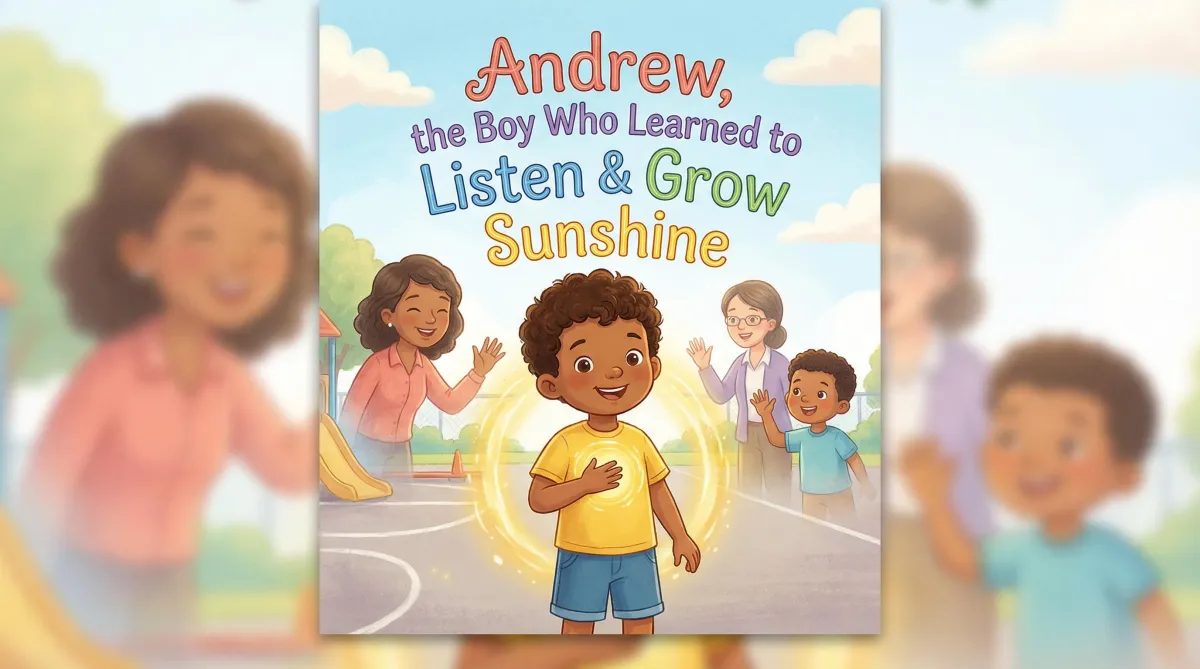
Andrew, The Boy Who Learnt to Listen & Grow Sunshine.
Andrew, the Boy Who Learned to Listen & Grow Sunshine.
“Watch me, Mummy! Look what I can do!”
Andrew shrieked with excitement as he soared into the air for one last jump on the trampoline. His laughter rang through the garden, bright and bursting with joy.
Mum sat on the patio, sipping her tea, while his younger sister, Angela, played with her dolls next to her. Mum’s face was turned toward him, but Andrew couldn’t tell if she was really looking—her sunglasses hid her eyes.
“Are you watching, Mummy?” he called again, bouncing higher.
“Yes, sweetheart!” Mum answered, her voice cheerful but a little tired. “I can see you. Well done! You’re getting so good on that trampoline.”
Andrew grinned. Warmth spread through his chest.
Mummy was watching. That’s what mattered most.
The Hollow Feeling
Grandad always said Andrew’s laugh could startle birds from trees, and his energy fizzed like a shaken soda bottle. Andrew was a normal, healthy boy—full of life and joy.
But there were times when he felt a strange hollow feeling in his chest.
It felt like no one was really there.
It felt like he was left out.
It felt like… loneliness.
A whispering, hungry feeling crept in:
“I’m alone. No one really sees me.”
Andrew didn’t understand it. He didn’t like it.
He just wanted it to go away.
The Attention-Seeker
To fill that hollow space and quiet the whisper, Andrew believed he had to make sure he was never left out or forgotten.
So Andrew became an expert at being noticed.
At home, when Mum was on the phone, the whisper got loud. His stomach tightened.
Suddenly—right that second—he needed help with his shoelaces or couldn’t find his toy car.
When Mum didn’t respond, he’d whine, cry, or knock something over until she had no choice but to stop and pay attention.
When his parents were talking to each other, or playing with Angela, the feeling returned. He tried to ignore it, but sometimes he just couldn’t.
He’d run circles, shout loudly, or drop his toys so they clattered on the floor.
At school, when his teacher, Mr. Evans, was busy helping another student, Andrew’s pencil would “accidentally” fall off the desk.
Once.
Twice.
Five times.
“Andrew…” Mr. Evans would sigh. “Quiet corner. Think about your choices, please.”
At football practice, instead of passing the ball, Andrew would leap into the air, do a silly tumble, or shout louder than everyone else—just to be noticed.
His thoughts buzzed like a hive of worried bees:
“I don’t want to be left out.
I have to make them see me.
I want to be the best.
I have to be first.
I have to be loud so they hear me.
If I’m quiet, no one will notice me.”
But the more Andrew acted out, the more adults frowned.
Friends rolled their eyes.
And the hollow feeling only grew.
Andrew wasn’t bad.
He was trying to meet a real emotional need—to be seen and heard—just in unhelpful ways.
The Glitter Glue Disaster
One rainy Tuesday, Mr. Evans revealed the new class project:
“Your mission,” he announced, “is to build the tallest, most magnificent cardboard castle ever!”
Andrew was paired with Leo—a quiet, thoughtful boy who loved drawing characters, dragons, and cool fantasy scenes.
As Leo sketched detailed turrets and drawbridges, Andrew’s chest tightened.
His whisper got louder:
“He’s ignoring me.
He doesn’t like me.
He doesn’t need my help.”
Before he could stop himself, Andrew grabbed the glitter glue.
“I know! Let’s make it SPARKLY!”
And before Leo could answer, Andrew smeared a giant, messy rainbow right over Leo’s careful drawing.
The classroom fell silent.
Leo’s chin wobbled.
A tear rolled down his cheek.
His beautiful drawing—the one he had worked so hard on—was ruined.
Andrew had gotten attention, alright—
But it felt heavy and sour.
And the hollow feeling?
It didn’t go away. It grew.
A Different Kind of Question – Safe Conversation
Instead of yelling, Mr. Evans knelt beside them.
“Leo,” he said gently, “you look really upset. Your plans were important to you, weren’t they?”
“Yes,” Leo sobbed. “And Andrew ruined them!”
“I understand,” Mr. Evans said softly. “It’s okay to feel upset when something you worked hard on gets spoiled.”
Then he turned to Andrew, who stood tense and pale, expecting the worst.
But instead of anger, Mr Evans said in a serious yet calm voice:
“And Andrew… what were you feeling right before you grabbed the glitter?”
Andrew’s eyes widened.
No one had ever asked him that before.
People usually said:
“What have you done?”
“Why did you do that?”
Not:
“What were you feeling?”
Andrew swallowed.
“I felt… left out. Like Leo didn’t want me. Like I didn’t matter.”
Mr Evans nodded slowly.
“Thank you for telling me, Andrew. I appreciate your honesty. That’s very brave.”
Something warm flickered inside Andrew.
For the first time, someone cared about what he felt—not just what he did.
“Feelings are messengers, even the uncomfortable ones,” Mr. Evans explained. “If we listen carefully, they tell us what we need.”
Mr Evans remembered how Mr. Daniel, the school counsellor, had been leading the school in becoming an emotionally healthy school, teaching staff and children to use Restorative Conversations—a way of resolving conflict and repairing harm by focusing on relationships and accountability rather than punishment.
He realised this was a perfect moment to practise.
“I wonder,” he said gently, “if you both would like to try a Safe Conversation with my help?”
Both boys nodded, unsure but willing.
Safe Conversation
Mr. Evans took a small wooden heart from his desk that had the words “It is safe to talk” on it.
“This heart is our speaking spot,” he explained.
“Whoever holds it gets to speak.
The other person listens—no interrupting, no blaming.”
He smiled gently.
“Before we talk about the hard feelings, we start with something important:
Appreciation.
Each of you will say:
One thing you appreciate about the other person
One thing you appreciate about yourself
Then we’ll move to our feeling sentences.”
🟦 Leo’s Appreciation
Mr. Evans handed the heart to Leo first.
Leo sniffled, then said:
“I appreciate… that Andrew is really funny. He makes the whole class laugh.”
“Good,” said Mr. Evans. “Now something you appreciate about yourself.”
Leo wiped his cheek.
“I appreciate… that I’m good at drawing and I try hard.”
“Excellent,” Mr Evans said.
“Andrew, can you repeat what Leo said to show him you heard it?”
Andrew repeated carefully:
“You appreciate that I’m funny, and you appreciate that you’re good at drawing and you work hard.”
Leo nodded, calmer now.
🟦 Andrew’s Appreciation
Mr. Evans passed the heart to Andrew.
Andrew took a breath.
“I appreciate… that you draw really cool characters, Leo. They make our projects look amazing.”
“And about yourself?” Mr Evans encouraged.
Andrew hesitated, then said:
“I appreciate… that I’m good at building things and coming up with ideas.”
“Leo,” said Mr Evans, “can you repeat what Andrew said?”
Leo repeated:
“You appreciate that I draw cool characters. And you appreciate that you’re good at building and have lots of ideas.”
The air between them softened.
The tension melted a little.
Safe Conversation Steps
“Now,” said Mr. Evans,
“We use our sentence starters:
I feel…
I think…
I need… or I wish…
Then we swap.”
He gave the heart back to Leo.
🟦 Leo Shares
“I feel… sad and angry.
I think… Andrew doesn’t care about my work.
I need… people to ask before they draw on my pictures.”
Mr Evans nodded.
“Andrew, repeat what Leo shared.”
“You feel sad and angry,” Andrew repeated quietly.
“You think I don’t care about your drawing. You need me to ask before I add anything.”
Leo nodded. His shoulders lowered.
🟦 Andrew Shares
Now it was Andrew’s turn.
He held the heart tightly.
“I feel… left out and lonely.
I think… when you draw and don’t talk to me, you don’t want me or need me.
I wish… we could be a team, and that I could know what my job is.”
“Leo,” said Mr Evans gently, “repeat what Andrew said.”
“You feel left out and lonely,” Leo said softly.
“You think I don’t want you when I’m drawing. And you wish we could be a team and you’d know what to do.”
Andrew nodded, feeling a small wave of relief.
🟦 Checking the Facts
“Leo,” Mr Evans asked,
“were you ignoring Andrew on purpose?”
Leo shook his head quickly.
“No. I was just concentrating. I didn’t know what he wanted to do.”
“Andrew,” Mr Evans said,
“can you hear that? Leo wasn’t trying to leave you out.”
Andrew nodded slowly.
“I… didn’t ask. I just thought he didn’t want me.”
Together, they made a simple plan:
Leo would keep drawing
Andrew would design and build the 3D towers and walls
They would talk before any big changes
Then Andrew looked at Leo and said sincerely:
“I’m really sorry I ruined your drawing.”
Leo took a breath.
“I forgive you. Let’s try again.”
Both boys returned to their table feeling lighter—safer.
The hollow feeling inside Andrew felt smaller, replaced by warmth and relief.
Mr Evans looked proudly at the boys. They had done something very brave in front of the whole class—sharing feelings, listening, and repairing.
He felt more confident about using Safe Conversations to help his pupils build emotionally healthy relationships.
The Feelings Check-In
That night, Mum didn’t lecture or scold.
She walked into Andrew’s room with two mugs of hot chocolate and a small feelings chart.
“Let’s do a Feelings Check-In,” she suggested. “I’ll listen. You go first.”
“Question 1: Which face matches how you felt today?”
Andrew pointed to lonely and guilty.
“Where do you feel that in your body?” Mum asked.
“In my chest and tummy. Heavy. Twist-y,” Andrew replied.
“What do you need when you feel that way?” she asked gently.
“I need someone to listen. I need to know I still matter even if I mess up.”
Mum nodded softly.
“Thank you for telling me. I felt frustrated today when my computer froze.
But now I feel peaceful—because we’re talking.”
Andrew felt the hollow space shrink.
Words felt better than noisy actions.
Learning to Carry Sunshine
The next week, the class had a wellbeing session with Mr. Daniel, the school counsellor.
He held up a mirror and said:
“Attention is like sunshine. Whatever you give it to, grows.
If you’re always waiting for attention from others…
it’s like begging for sunshine.
But when you learn to give attention—to yourself and others—
you carry your own sunshine wherever you go.”
Andrew’s eyes widened.
I can carry sunshine?
I don’t have to wait for it from others?
Mr. Daniel passed out cards with tools.
Andrew chose the TimeOut Tool, which had four questions:
What am I feeling?
What am I thinking?
What do I need?
How can I get it—and when?
Mr. Daniel also gave him a feelings-word card to help him name emotions better.
That evening at dinner, when Mum was speaking to Dad and the jealous-lonely feeling rose, Andrew squeezed the card in his pocket and silently asked himself:
“What am I feeling?”
➜ Jealous and lonely.
“What am I thinking?”
➜ They don’t care about me.
“What do I need?”
➜ A moment with Mum.
“How can I get it—and when?”
➜ Wait until they finish talking, then ask.
When the moment came, Andrew asked calmly:
“Mum… when can we do another Feelings Check-In?”
Mum beamed.
“Well done for asking so calmly. How about after homework? Hot cocoa?”
Sunshine warmed Andrew’s chest.
The Transformation Begins
Over the next weeks, Andrew practised his tools:
At school, he raised his hand instead of shouting.
In the lunch line, he waited his turn (even when he didn’t feel like it).
At home, he played quietly when his parents were busy and reminded himself, “I can ask for time later. I still matter.”
At football, he passed the ball and cheered for his teammates instead of trying to show off.
The more he gave attention—to himself and to others—
the more sunshine grew inside him.
The hollow feeling began to fade.
Partnering to Grow
When it was time to rebuild the cardboard castle, Andrew tried something new:
“What’s your idea, Leo? I’ll listen first.”
Leo’s face lit up.
“I’m good at drawing but not building. I need your help!”
Andrew grinned.
He does need me.
Together, they built the tallest, strongest castle—sturdy, not sparkly.
Mr. Evans smiled proudly.
“Andrew, you’ve become such a valuable team member.”
Warmth filled Andrew’s heart.
When I give attention… I get attention back.
But now it isn’t lonely—it’s shared.
The Secret of Sunshine
Andrew still had big feelings sometimes.
But now he had tools:
TimeOut Tool – to pause, notice, and plan.
Feelings Check-In – to share honestly with a trusted adult.
Safe Conversations – “I feel… I think… I need…” instead of shouting or hurting.
Focused attention – choosing where to place his energy.
Self-attunement – valuing his own attention, knowing it is powerful, enough, and worth sharing.
He learned to nurture his attention like a garden, instead of waiting for others to water it.
And the grown-ups learned too:
Behind every action is a feeling,
and behind every feeling is a need.
By listening, they weren’t just managing behaviour—they were building a lifelong partnership with Andrew.
Andrew had discovered the greatest secret of all:
When you give your attention to yourself and others—
in a healthy way—
you never run out.
It multiplies.
It fills your heart… and others’, too.
And so, the boy who once begged for attention became the boy who carried sunshine wherever he went— Andrew, the Attention-Giver.
✨ Pause for Reflection (for children):
How do you feel when someone asks about your feelings?
What’s one way you could give attention to yourself today?
What’s one way you could give attention to someone else?
What happens inside you when you notice and name your feelings?
Can you tell what you need when you feel big or small feelings?
Are you learning to get what you need in a calm and safe way?
Notes for Grown-Ups: Why These Tools Matter
This story quietly weaves in several evidence-informed practices:
Emotion Coaching & Naming Feelings
When Mum and Mr. Evans help Andrew name his feelings (“lonely”, “guilty”) and link them to needs, they’re using emotion coaching. Emotion coaching by parents and practitioners is linked to better emotion regulation, social skills, and fewer behaviour difficulties in children.Feelings Check-In as a Daily Practice
The Feelings Check-In with Mum (faces, body sensations, needs) reflects social–emotional learning practices that build self-awareness and emotional literacy. Regular feelings check-ins help children recognise their emotions and intensity, and support better self-regulation and classroom behaviour.Restorative / Safe Conversations
The heart token, appreciation, “I feel / I think / I need” structure, and checking the facts are all drawn from restorative approaches in schools, where the focus is on repairing harm and strengthening relationships instead of punishment. These approaches have been associated with stronger relationships, better engagement, and reduced need for sanctions.TimeOut Tool as Self-Regulation (Not Punishment)
Andrew’s TimeOut Tool is a self-regulation strategy, not an exclusion or “naughty step.” It invites him to pause, notice feelings and thoughts, and plan a safe action—similar to cognitive reappraisal and self-regulation scaffolding approaches shown to improve children’s emotional control and coping.
🌱 Ready to Raise a V.I.S.I.B.L.E Child who can Listen, Communicate, and Shine Inside Out?
Supporting your child to understand their emotions, communicate their needs safely, and build healthy, connected relationships doesn’t just shape their behaviour— it transforms their confidence, their wellbeing, and your bond with them.
Are unhealthy emotional habits negatively affecting your parenting and relationships?
💛 You don’t have to figure it out alone. Let’s walk this journey of attuned, emotionally healthy parenting together.
Take the first step towards becoming the calm, confident, connected parent your child needs—and deserves.
Book a call at https://breezehighflyers.co/callto to start your journey.


Empowering you to grow, succeed, and thrive. Our mission is to provide expert guidance, transformative resources, and unwavering support on your journey to a better life. Stay connected for inspiration, coaching insights, and life-changing opportunities.
Quick Links
Contact Us
Legal
© BreezeHighFlyers. 2026 All Rights Reserved.