
Unlock Your Potential, Transform Your Life!


Over 300 5-Star Reviews!
Our Professionals
Inspiration & Insights – Fuel Your Growth!

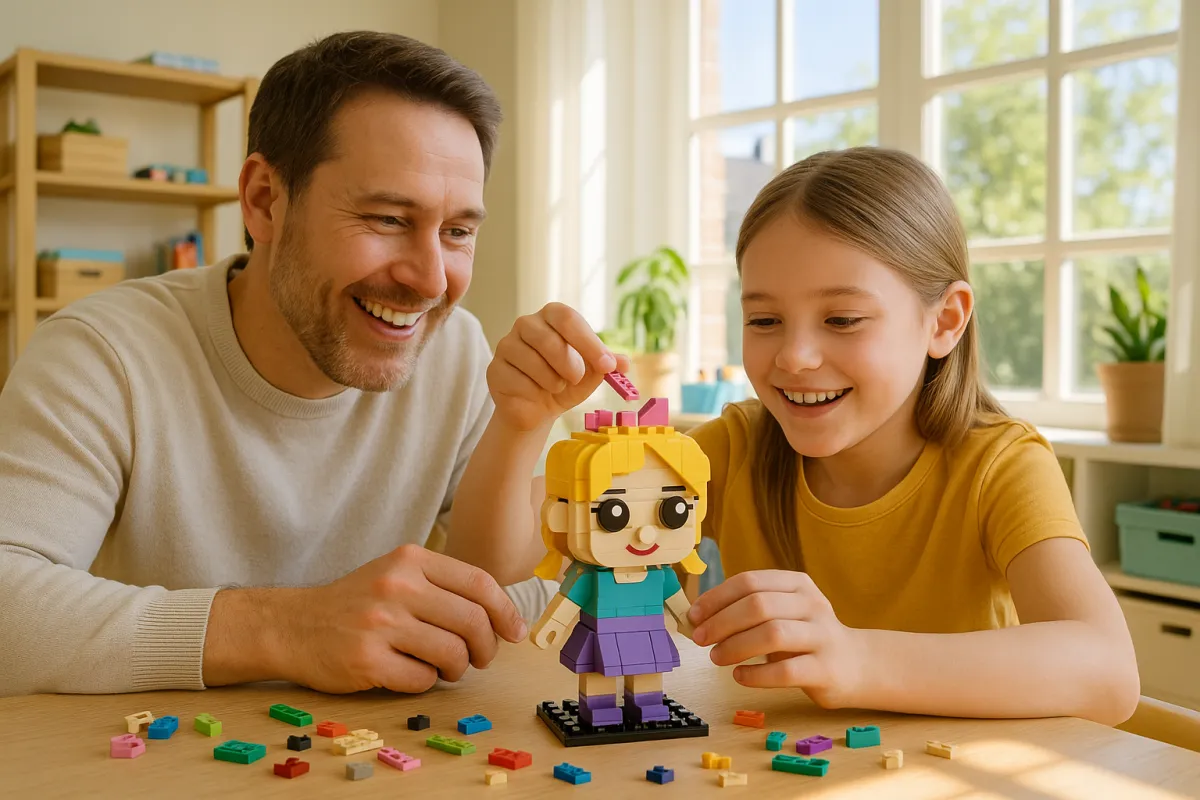
The Attuned Parent: Building Lifelong Connection with Your Child
The V.I.S.I.B.L.E. Child: Building Lifelong Connection as an Attuned Parent
The greatest gift you can give your child isn’t a toy, an education, or even security — it’s you.
More specifically, it’s your presence: your ability to really see and hear them.
This is the heart of attuned parenting.
Attunement is nothing like the old methods of superiority, entitlement, or demanding obedience without effort. Instead, it’s about humbling yourself and becoming the example you want your child to follow. If you long for a child who listens, respects, and trusts you, it begins with you modeling what it looks like to listen, respect, and trust them.
But here’s the honest truth: many of us never had this modeled to us. Perhaps you grew up in a home where children were expected to be “seen and not heard,” or where rules left little room for curiosity or connection.
The good news? You can rewrite the story. You can give your child what you didn’t receive. And in the process, you don’t just raise them differently — you grow and heal alongside them.
What Does Attuned Parenting Look Like?
Attuned parenting isn’t about perfection; it’s about presence. It looks like slowing down to really listen — with empathy and sensitivity. It means resisting the urge to jump in with advice, correction, or judgment, and instead making space for your child to reveal their world.
Imagine the gift of your child running to you, not away from you, because you are their safe place.
The Tools Attuned Parents Practice
Active Listening: Eye contact, nods, and genuine responses that say, “I hear you,” not while scrolling your phone.
Mirroring: Reflecting back what your child says or feels — “It sounds like you felt left out when that happened.” This doesn’t mean you agree; it means you value their experience.
Why It Matters
Research backs this up. Developmental psychologist Mary Ainsworth’s attachment studies (Ainsworth et al., 1978) revealed that children who consistently felt seen and responded to were more secure, resilient, and better able to regulate emotions throughout life.
More recent neuroscience research by Dr. Dan Siegel (2012) shows that when children feel “seen, safe, soothed, and secure,” their brains literally wire for stronger relationships, emotional regulation, and problem-solving skills.
The Benefits Are Powerful
Your child feels safe, seen, and understood.
They learn it’s okay to express themselves honestly.
You build trust that carries through every age and stage.
You create a relationship that’s a partnership, not a power struggle.
Absent Parenting: When Presence Isn’t the Same as Connection
Now here’s the gentle challenge: are you truly present — or just physically nearby?
Picture this: you’re at the dinner table, your child is telling you about their day, but your mind is racing with work deadlines, family stress, or unpaid bills. You nod, maybe even smile, but deep down — you know you’re not really there.
This is absent parenting. Not because you’re physically absent, but because unresolved thoughts and emotions create a barrier between you and your child.
Children sense this absence deeply. When we’re caught in cycles of anger, fear, or overwhelm, those feelings sit in the middle like an invisible wall. Our children can’t climb over it. And no matter how much we vent or dump, they cannot fix or carry our emotions.
Unfortunately, when parents stay emotionally unavailable, children often respond in the only way they know how: through behavior.
The Hidden Cost of Absent Parenting
A child labeled “attention-seeking” is usually connection-seeking.
They don’t yet have the words to say: “I need you right now. I need to feel safe, seen, and loved.” So instead, they interrupt, act out, or cling.
And here’s the heartbreaking truth: if they don’t get the connection they crave, they often internalize the belief that they’re “too much,” “not enough,” or “unworthy of attention.” These early experiences shape self-esteem and relational patterns well into adulthood.
One long-term study published in Child Development (Sroufe, Egeland, Carlson, & Collins, 2005) found that children who experienced consistent emotional attunement from their parents were more likely to thrive socially, academically, and emotionally as adults. In contrast, children who experienced emotional absence often struggled with self-regulation, trust, and relational stability later in life.
The cost of absent parenting isn’t just temporary misbehavior — it’s a missed opportunity to shape lifelong resilience.
How Your Attention-Seeking Child Can Become a V.I.S.I.B.L.E. Child
What if instead of seeing your child as “needy,” you chose to see them as visible?
Attuned parents help their children move from acting out to being seen. Here’s how to make your child V.I.S.I.B.L.E.: Valued, Important, Seen, Included, Belonging, Loved, Empowered.
Active Listening: Put down the phone. Look them in the eye. Even five minutes of undivided attention can be transformative.
Mirroring: Validate their feelings — “It sounds like you were frustrated when no one picked you for the team.”
Intentional Connection: Create a daily or weekly ritual of one-on-one time. This reassures your child: “I don’t have to act out — I know I’ll be seen.”
Here’s a simple script you can use:
Instead of saying, “You’re just acting out,” try:
“What are you feeling right now?”
“It looks like you need some connection time with me. Thank you for showing me so clearly. Let’s talk more during our special time at 6 p.m.”
This shift helps your child wait with trust instead of panic and teaches them to acknowledge their needs in healthy ways and express their emotions confidently.
The Parent’s Inner Work
Of course, you can’t give what you don’t have.
Being an attuned parent begins with being attuned to yourself. Before you can truly see your child, you must first learn to see what’s happening inside you — your own emotions, beliefs, triggers, and reactions in those everyday parenting moments.
When parents practice self-management — through mindful breathing, meditation, EFT/tapping, or release techniques like The Sedona Method — they begin to gently dismantle the emotional walls that keep them disconnected, unavailable, or reactive. These tools help regulate your nervous system, bring clarity under pressure, and allow you to approach your child from a grounded, centered place — to respond rather than react.
Your child doesn’t need a perfect version of you — they need a present one. They need a parent who’s aware, reflective, and willing to repair when they get it wrong. Every time you pause, model humility and self-correction, or even apologize, you show your child what emotional health and maturity look like in action.
This is what real leadership in parenting truly means.
It’s not about controlling your child’s behavior — it’s about leading yourself first.
As I often say: manage things, lead people.
That means your primary role isn’t to “manage your child,” but to manage yourself — your thoughts, emotions, expectations, and responses. When you model self-control, emotional balance, and growth, your child learns from your example, not your instructions, and you naturally become the kind of leader your child wants to follow.
Now, let’s be clear — this doesn’t mean taking a hands-off approach or leaving your child to figure it all out alone. In the early years, your role is to manage for your child: their feeding, sleeping, safety, and emotional regulation. But as they grow, your role naturally shifts — from managing for them to managing with them.
However, the misguided idea that parents are just meant to “manage their children” keeps many stuck in cycles of control and frustration. Imagine this dynamic playing out with a 16-year-old. By that stage, your teen is naturally taking more responsibility for managing their time, friendships, and emotions. If you still believe your job is to manage them, tension is inevitable. It creates confusion, conflict, confrontation, and contention — not connection.
Parenting isn’t about tightening control as your child matures — it’s about gradually transferring responsibility.
You begin by teaching, guiding, and empowering. You support them as they learn to manage their own body, emotions, choices, and responsibilities. Year by year, age by age, maturity unfolds — and you slowly, intentionally release your management role.
You move from being the one in charge of everything to becoming a wise, supportive partner in their growth. Eventually, as full maturity arrives, you release responsibility altogether and allow your child to take full management of their life.
This is the growth journey of both parent and child.
Your child grows increasingly independent, capable, and confident — while you grow more emotionally intelligent, flexible, and attuned. You evolve from manager to mentor, from rule enforcer to relational guide.
But when you, as a parent, don’t grow with your child, you risk losing attunement and becoming emotionally out of sync. It becomes easy to misread behaviors, miss developmental cues, or try to control what’s meant to be guided. The result is often distance, defensiveness, and frustration on both sides.
Cultivating a growth mindset changes things.
It helps you stay curious rather than critical, open rather than rigid, and connected rather than controlling. You begin to see each new stage of your child’s development not as a challenge to survive or control, but as an opportunity for mutual growth and transformation.
Growing with Your Child
Growing with your child means embracing parenting as a sacred process of becoming — for both of you. It’s not just about shaping your child; it’s about allowing the experience of parenting to shape and refine you.
When you begin to see parenting as a relationship that evolves you, you can start to honor it as a journey that invites you to rise — to expand emotionally, spiritually, and relationally. It calls you to heal old patterns, to respond instead of react, and to become the living model of emotional intelligence and self-leadership that your child will one day emulate.
Every stage of your child’s growth becomes a mirror — revealing your capacity for patience, presence, and transformation. Some moments will stretch you; others will soften you. But in each one lies an invitation: to grow deeper in awareness, compassion, and grace.
And every time you meet that reflection with humility — choosing to learn instead of control — you strengthen not only your bond with your child but also your connection with yourself.
In the end, the greatest legacy you leave your child isn’t your management — it’s your modeling.
Because when you lead yourself with love, integrity, and self-awareness, your child learns that true leadership begins within.
A Gentle Challenge
So, let me ask: Are you repeating unhealthy patterns from how you were raised — or are you ready to step into something new?
Your child doesn’t just need discipline, provision, or love in theory. They need you — attuned, present, and emotionally available.
The reward? A child who doesn’t have to scream to be heard. A parent who feels less drained and more connected. And a healthy relationship that grows into a lifelong bond of trust.
Ready to Begin Your Journey?
If you’ve ever wondered why your child feels distant, or why you feel disconnected even when you’re in the same room, this may be the missing link.
It’s not about managing your child better — it’s about managing yourself first, so you can show up attuned.
When you do, your child becomes V.I.S.I.B.L.E. — and you both receive the gift of a deeper, lasting connection.
Ready? Let’s walk together as we break barriers, shift mindsets, and create a new legacy of partnering parents—beginning in your own family. Book a call with me athttps://breezehighflyers.co/call
References
Ainsworth, M. D. S., Blehar, M. C., Waters, E., & Wall, S. (1978). Patterns of Attachment: A Psychological Study of the Strange Situation. Hillsdale, NJ: Lawrence Erlbaum Associates.
Siegel, D. J. (2012). The Whole-Brain Child: 12 Revolutionary Strategies to Nurture Your Child’s Developing Mind. New York: Bantam Books.
Sroufe, L. A., Egeland, B., Carlson, E. A., & Collins, W. A. (2005). The Development of the Person: The Minnesota Study of Risk and Adaptation from Birth to Adulthood. New York: Guilford Press.
Schore, A. N. (2015). Affect Regulation and the Origin of the Self: The Neurobiology of Emotional Development. New York: Routledge.
Feldman, R. (2017). “The Neurobiology of Human Attachments.” Trends in Cognitive Sciences, 21(2), 80–99.


Empowering you to grow, succeed, and thrive. Our mission is to provide expert guidance, transformative resources, and unwavering support on your journey to a better life. Stay connected for inspiration, coaching insights, and life-changing opportunities.
Quick Links
Contact Us
Legal
© BreezeHighFlyers. 2026 All Rights Reserved.